✔️To Do
❓Questions
🔗Links
Module: Database Command Line - Instructor Notes
Date: 2026-10-12
- [Record a short video welcoming them and giving a preview of upcoming assignments ]
- Notes for video:
- [Copy/paste announcements from Canvas]
- Template for Canvas:
The reading assignment for this module comes from [ insert ]. A PDF is attached, as well as the link to the website.
- - PDF Insert
- - URL here
License: This work is licensed under a Creative Commons Attribution-ShareAlike 3.0 License
🎥Video
Welcome Video
[paste embed code here for embedded video]
[paste embed code here for copying]
[paste video link here]
🎙️Notes / Lecture
Instructor Notes - Section 1
[SQL Server Command Line Basics] Video
<iframe width="640" height="347" src="https://www.loom.com/embed/9c3a966be9194531bb2d808ba3c0b864?sid=86c55f99-4087-4d48-a1b4-1d543e614a58" frameborder="0" webkitallowfullscreen mozallowfullscreen allowfullscreen></iframe>
https://www.loom.com/share/9c3a966be9194531bb2d808ba3c0b864?sid=65434745-cb65-46f1-9e7b-e8d4e4cc49a6
MS SQL Basics
Database Operations
CREATE DATABASE Norman;
GO
- Creates a new database

SELECT name FROM sys.databases;
GO
- Shows all current databases on the server
USE Norman;
GO
- Sets the active database context to
Norman

Table Management (DDL)
CREATE TABLE table1 (
    user_id VARCHAR(50)
);
GO
SELECT name FROM sys.tables;
GO
- Lists all tables in the current database
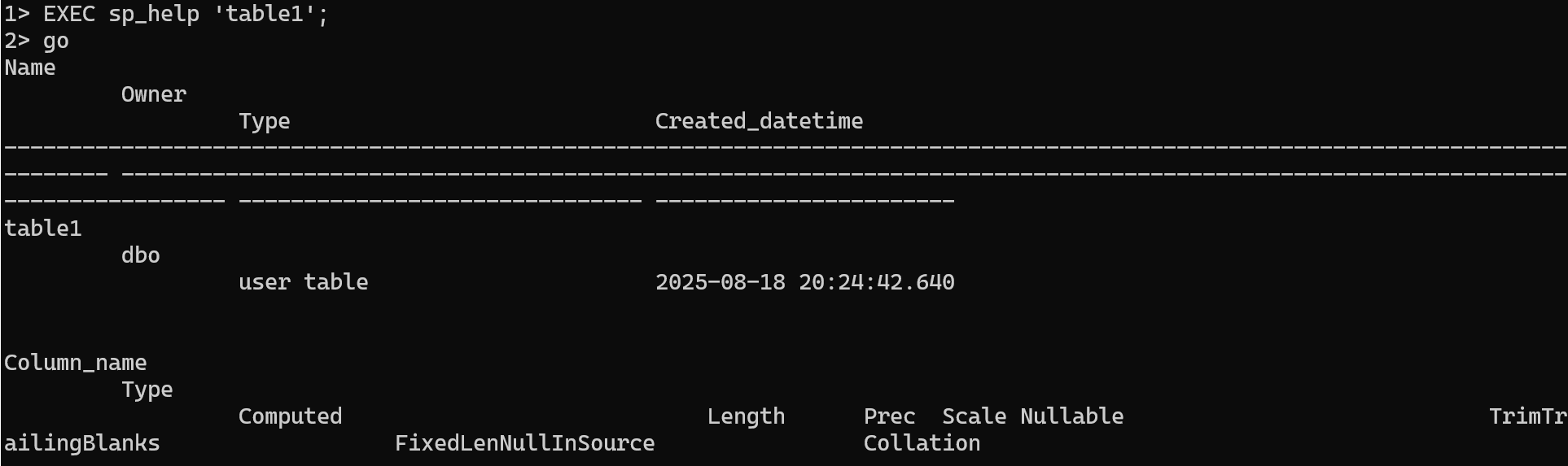
EXEC sp_help 'table1';
GO
- Displays table schema details (columns, types, attributes)
CREATE TABLE employees (
    employee_id INT IDENTITY(1,1) PRIMARY KEY,
    first_name VARCHAR(50) NOT NULL,
    last_name VARCHAR(50) NOT NULL,
    bio TEXT,
    salary DECIMAL(10,2) NOT NULL,
    is_active BIT DEFAULT 1,
    hire_date DATE
);
GO
- Identity 1,1 is an auto increment primary key
EXEC sp_help 'employees';
GO
- Displays table definition and primary key constraints

Data Manipulation (DML)
INSERT INTO employees (first_name, last_name, bio, salary, is_active)
VALUES ('Alice', 'Johnson', 'Experienced secretary', 45332.00, 1);
GO
- Notice here that I don't insert the ID number because it's auto incremented
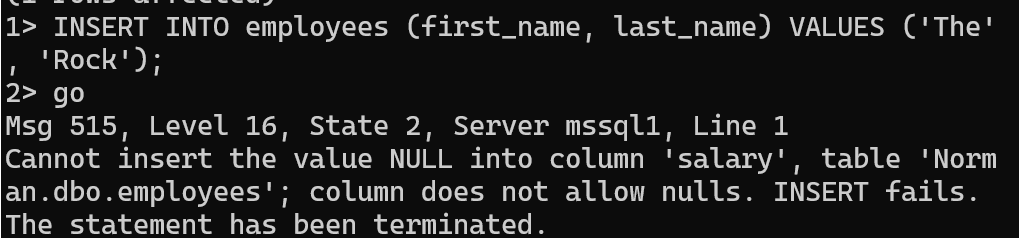
INSERT INTO employees (first_name, last_name)
VALUES ('The', 'Rock');
GO
- Fails with an error:
salarycannot be NULL because the column has aNOT NULLconstraint
INSERT INTO employees (first_name, last_name, bio, salary)
VALUES ('The', 'Rock', NULL, 99999.99);
GO
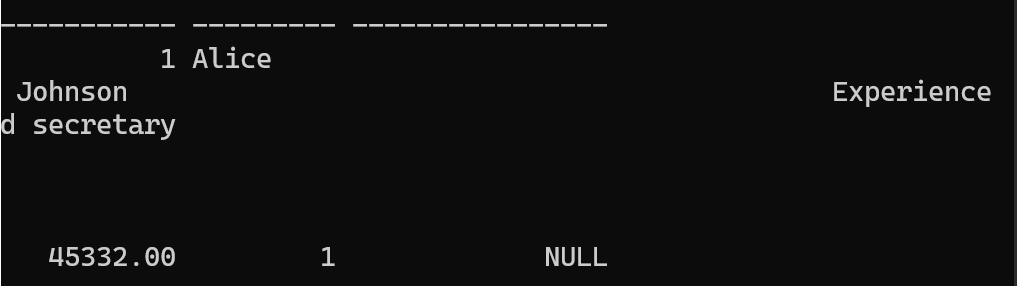
SELECT * FROM employees;
GO
- Queries and displays all records from the
employeestable
DELETE FROM employees;
GO
- Deletes all records from the
employeestable
Instructor Notes - Section 2
[topic] Video
[paste embed code here for embedded video]
[paste embed code here for copying]
[paste video link here]
🟠 Section 2 -
Instructor Notes - Section 3
[topic] Video
[paste embed code here for embedded video]
[paste embed code here for copying]
[paste video link here]
🟩 Section 3 -
Instructor Notes - Section 4
[topic] Video
[paste embed code here for embedded video]
[paste embed code here for copying]
[paste video link here]
🟥 Section 4 -
Instructor Notes - Section 5
[topic] Video
[paste embed code here for embedded video]
[paste embed code here for copying]
[paste video link here]
🟣 Section 5 -
🧬 Programming Time
| !350 | !350 |
|---|
#reading a CSV with headers named x1, x2, and y
#returns x (2-D array) and y (1-D array)
def load_x1x2y(csv_path: Path) -> Tuple[np.ndarray, np.ndarray]:
    """Load x1, x2, and y columns from a CSV with headers x1,x2,y."""
    data = np.genfromtxt(csv_path, delimiter=",", names=True, dtype=float)
%%
    #make sure required headers exist
    needed = {"x1", "x2", "y"}
    if data.dtype.names is None or not needed.issubset(set(data.dtype.names)):
        raise ValueError("CSV must have headers: x1,x2,y")
    x1 = np.asarray(data["x1"], dtype=float)
    x2 = np.asarray(data["x2"], dtype=float)
    y = np.asarray(data["y"], dtype=float)

    #basic shape checks
    if x1.ndim != 1 or x2.ndim != 1 or y.ndim != 1:
        raise ValueError("x1, x2, y must be 1-D arrays.")
    if len(x1) != len(x2) or len(x1) != len(y):
        raise ValueError("x1, x2, and y must be the same length.")

    #stack x1 and x2 into a 2-D feature matrix
    X = np.column_stack([x1, x2]).astype(float)
    return X, y %%
If your CSV is missing any of these headers it'll throw a ValueError — make sure x1, x2, and y are all present.
    needed = {"x1", "x2", "y"}
    if data.dtype.names is None or not needed.issubset(set(data.dtype.names)):
        raise ValueError("CSV must have headers: x1,x2,y")
If your CSV is missing any of these headers it'll throw a ValueError — make sure x1, x2, and y are all present.
    needed = {"x1", "x2", "y"}
    if data.dtype.names is None or not needed.issubset(set(data.dtype.names)):
        raise ValueError("CSV must have headers: x1,x2,y")
If your CSV is missing any of these headers it'll throw a ValueError — make sure x1, x2, and y are all present.
    needed = {"x1", "x2", "y"}
    if data.dtype.names is None or not needed.issubset(set(data.dtype.names)):
        raise ValueError("CSV must have headers: x1,x2,y")
If your CSV is missing any of these headers it'll throw a ValueError — make sure x1, x2, and y are all present.
    needed = {"x1", "x2", "y"}
    if data.dtype.names is None or not needed.issubset(set(data.dtype.names)):
        raise ValueError("CSV must have headers: x1,x2,y")
#reading a CSV with headers named x1, x2, and y
#returns x (2-D array) and y (1-D array)
def load_x1x2y(csv_path: Path) -> Tuple[np.ndarray, np.ndarray]:
    """Load x1, x2, and y columns from a CSV with headers x1,x2,y."""
    data = np.genfromtxt(csv_path, delimiter=",", names=True, dtype=float)
%%
    #make sure required headers exist
    needed = {"x1", "x2", "y"}
    if data.dtype.names is None or not needed.issubset(set(data.dtype.names)):
        raise ValueError("CSV must have headers: x1,x2,y")
    x1 = np.asarray(data["x1"], dtype=float)
    x2 = np.asarray(data["x2"], dtype=float)
    y = np.asarray(data["y"], dtype=float)

    #basic shape checks
    if x1.ndim != 1 or x2.ndim != 1 or y.ndim != 1:
        raise ValueError("x1, x2, y must be 1-D arrays.")
    if len(x1) != len(x2) or len(x1) != len(y):
        raise ValueError("x1, x2, and y must be the same length.")

    #stack x1 and x2 into a 2-D feature matrix
    X = np.column_stack([x1, x2]).astype(float)
    return X, y %%
If your CSV is missing any of these headers it'll throw a ValueError — make sure x1, x2, and y are all present.
    needed = {"x1", "x2", "y"}
    if data.dtype.names is None or not needed.issubset(set(data.dtype.names)):
        raise ValueError("CSV must have headers: x1,x2,y")
If your CSV is missing any of these headers it'll throw a ValueError — make sure x1, x2, and y are all present.
    needed = {"x1", "x2", "y"}
    if data.dtype.names is None or not needed.issubset(set(data.dtype.names)):
        raise ValueError("CSV must have headers: x1,x2,y")
If your CSV is missing any of these headers it'll throw a ValueError — make sure x1, x2, and y are all present.
    needed = {"x1", "x2", "y"}
    if data.dtype.names is None or not needed.issubset(set(data.dtype.names)):
        raise ValueError("CSV must have headers: x1,x2,y")
If your CSV is missing any of these headers it'll throw a ValueError — make sure x1, x2, and y are all present.
    needed = {"x1", "x2", "y"}
    if data.dtype.names is None or not needed.issubset(set(data.dtype.names)):
        raise ValueError("CSV must have headers: x1,x2,y")
#reading a CSV with headers named x1, x2, and y
#returns x (2-D array) and y (1-D array)
def load_x1x2y(csv_path: Path) -> Tuple[np.ndarray, np.ndarray]:
    """Load x1, x2, and y columns from a CSV with headers x1,x2,y."""
    data = np.genfromtxt(csv_path, delimiter=",", names=True, dtype=float)
%%
    #make sure required headers exist
    needed = {"x1", "x2", "y"}
    if data.dtype.names is None or not needed.issubset(set(data.dtype.names)):
        raise ValueError("CSV must have headers: x1,x2,y")
    x1 = np.asarray(data["x1"], dtype=float)
    x2 = np.asarray(data["x2"], dtype=float)
    y = np.asarray(data["y"], dtype=float)

    #basic shape checks
    if x1.ndim != 1 or x2.ndim != 1 or y.ndim != 1:
        raise ValueError("x1, x2, y must be 1-D arrays.")
    if len(x1) != len(x2) or len(x1) != len(y):
        raise ValueError("x1, x2, and y must be the same length.")

    #stack x1 and x2 into a 2-D feature matrix
    X = np.column_stack([x1, x2]).astype(float)
    return X, y %%
If your CSV is missing any of these headers it'll throw a ValueError — make sure x1, x2, and y are all present.
    needed = {"x1", "x2", "y"}
    if data.dtype.names is None or not needed.issubset(set(data.dtype.names)):
        raise ValueError("CSV must have headers: x1,x2,y")
If your CSV is missing any of these headers it'll throw a ValueError — make sure x1, x2, and y are all present.
    needed = {"x1", "x2", "y"}
    if data.dtype.names is None or not needed.issubset(set(data.dtype.names)):
        raise ValueError("CSV must have headers: x1,x2,y")
If your CSV is missing any of these headers it'll throw a ValueError — make sure x1, x2, and y are all present.
    needed = {"x1", "x2", "y"}
    if data.dtype.names is None or not needed.issubset(set(data.dtype.names)):
        raise ValueError("CSV must have headers: x1,x2,y")
If your CSV is missing any of these headers it'll throw a ValueError — make sure x1, x2, and y are all present.
    needed = {"x1", "x2", "y"}
    if data.dtype.names is None or not needed.issubset(set(data.dtype.names)):
        raise ValueError("CSV must have headers: x1,x2,y")
#reading a CSV with headers named x1, x2, and y
#returns x (2-D array) and y (1-D array)
def load_x1x2y(csv_path: Path) -> Tuple[np.ndarray, np.ndarray]:
    """Load x1, x2, and y columns from a CSV with headers x1,x2,y."""
    data = np.genfromtxt(csv_path, delimiter=",", names=True, dtype=float)
%%
    #make sure required headers exist
    needed = {"x1", "x2", "y"}
    if data.dtype.names is None or not needed.issubset(set(data.dtype.names)):
        raise ValueError("CSV must have headers: x1,x2,y")
    x1 = np.asarray(data["x1"], dtype=float)
    x2 = np.asarray(data["x2"], dtype=float)
    y = np.asarray(data["y"], dtype=float)

    #basic shape checks
    if x1.ndim != 1 or x2.ndim != 1 or y.ndim != 1:
        raise ValueError("x1, x2, y must be 1-D arrays.")
    if len(x1) != len(x2) or len(x1) != len(y):
        raise ValueError("x1, x2, and y must be the same length.")

    #stack x1 and x2 into a 2-D feature matrix
    X = np.column_stack([x1, x2]).astype(float)
    return X, y %%
If your CSV is missing any of these headers it'll throw a ValueError — make sure x1, x2, and y are all present.
    needed = {"x1", "x2", "y"}
    if data.dtype.names is None or not needed.issubset(set(data.dtype.names)):
        raise ValueError("CSV must have headers: x1,x2,y")
If your CSV is missing any of these headers it'll throw a ValueError — make sure x1, x2, and y are all present.
    needed = {"x1", "x2", "y"}
    if data.dtype.names is None or not needed.issubset(set(data.dtype.names)):
        raise ValueError("CSV must have headers: x1,x2,y")
If your CSV is missing any of these headers it'll throw a ValueError — make sure x1, x2, and y are all present.
    needed = {"x1", "x2", "y"}
    if data.dtype.names is None or not needed.issubset(set(data.dtype.names)):
        raise ValueError("CSV must have headers: x1,x2,y")
If your CSV is missing any of these headers it'll throw a ValueError — make sure x1, x2, and y are all present.
    needed = {"x1", "x2", "y"}
    if data.dtype.names is None or not needed.issubset(set(data.dtype.names)):
        raise ValueError("CSV must have headers: x1,x2,y")
#reading a CSV with headers named x1, x2, and y
#returns x (2-D array) and y (1-D array)
def load_x1x2y(csv_path: Path) -> Tuple[np.ndarray, np.ndarray]:
    """Load x1, x2, and y columns from a CSV with headers x1,x2,y."""
    data = np.genfromtxt(csv_path, delimiter=",", names=True, dtype=float)
%%
    #make sure required headers exist
    needed = {"x1", "x2", "y"}
    if data.dtype.names is None or not needed.issubset(set(data.dtype.names)):
        raise ValueError("CSV must have headers: x1,x2,y")
    x1 = np.asarray(data["x1"], dtype=float)
    x2 = np.asarray(data["x2"], dtype=float)
    y = np.asarray(data["y"], dtype=float)

    #basic shape checks
    if x1.ndim != 1 or x2.ndim != 1 or y.ndim != 1:
        raise ValueError("x1, x2, y must be 1-D arrays.")
    if len(x1) != len(x2) or len(x1) != len(y):
        raise ValueError("x1, x2, and y must be the same length.")

    #stack x1 and x2 into a 2-D feature matrix
    X = np.column_stack([x1, x2]).astype(float)
    return X, y %%
If your CSV is missing any of these headers it'll throw a ValueError — make sure x1, x2, and y are all present.
    needed = {"x1", "x2", "y"}
    if data.dtype.names is None or not needed.issubset(set(data.dtype.names)):
        raise ValueError("CSV must have headers: x1,x2,y")
If your CSV is missing any of these headers it'll throw a ValueError — make sure x1, x2, and y are all present.
    needed = {"x1", "x2", "y"}
    if data.dtype.names is None or not needed.issubset(set(data.dtype.names)):
        raise ValueError("CSV must have headers: x1,x2,y")
If your CSV is missing any of these headers it'll throw a ValueError — make sure x1, x2, and y are all present.
    needed = {"x1", "x2", "y"}
    if data.dtype.names is None or not needed.issubset(set(data.dtype.names)):
        raise ValueError("CSV must have headers: x1,x2,y")
If your CSV is missing any of these headers it'll throw a ValueError — make sure x1, x2, and y are all present.
    needed = {"x1", "x2", "y"}
    if data.dtype.names is None or not needed.issubset(set(data.dtype.names)):
        raise ValueError("CSV must have headers: x1,x2,y")
#reading a CSV with headers named x1, x2, and y
#returns x (2-D array) and y (1-D array)
def load_x1x2y(csv_path: Path) -> Tuple[np.ndarray, np.ndarray]:
    """Load x1, x2, and y columns from a CSV with headers x1,x2,y."""
    data = np.genfromtxt(csv_path, delimiter=",", names=True, dtype=float)
%%
    #make sure required headers exist
    needed = {"x1", "x2", "y"}
    if data.dtype.names is None or not needed.issubset(set(data.dtype.names)):
        raise ValueError("CSV must have headers: x1,x2,y")
    x1 = np.asarray(data["x1"], dtype=float)
    x2 = np.asarray(data["x2"], dtype=float)
    y = np.asarray(data["y"], dtype=float)

    #basic shape checks
    if x1.ndim != 1 or x2.ndim != 1 or y.ndim != 1:
        raise ValueError("x1, x2, y must be 1-D arrays.")
    if len(x1) != len(x2) or len(x1) != len(y):
        raise ValueError("x1, x2, and y must be the same length.")

    #stack x1 and x2 into a 2-D feature matrix
    X = np.column_stack([x1, x2]).astype(float)
    return X, y %%
If your CSV is missing any of these headers it'll throw a ValueError — make sure x1, x2, and y are all present.
    needed = {"x1", "x2", "y"}
    if data.dtype.names is None or not needed.issubset(set(data.dtype.names)):
        raise ValueError("CSV must have headers: x1,x2,y")
If your CSV is missing any of these headers it'll throw a ValueError — make sure x1, x2, and y are all present.
    needed = {"x1", "x2", "y"}
    if data.dtype.names is None or not needed.issubset(set(data.dtype.names)):
        raise ValueError("CSV must have headers: x1,x2,y")
If your CSV is missing any of these headers it'll throw a ValueError — make sure x1, x2, and y are all present.
    needed = {"x1", "x2", "y"}
    if data.dtype.names is None or not needed.issubset(set(data.dtype.names)):
        raise ValueError("CSV must have headers: x1,x2,y")
If your CSV is missing any of these headers it'll throw a ValueError — make sure x1, x2, and y are all present.
    needed = {"x1", "x2", "y"}
    if data.dtype.names is None or not needed.issubset(set(data.dtype.names)):
        raise ValueError("CSV must have headers: x1,x2,y")
#reading a CSV with headers named x1, x2, and y
#returns x (2-D array) and y (1-D array)
def load_x1x2y(csv_path: Path) -> Tuple[np.ndarray, np.ndarray]:
    """Load x1, x2, and y columns from a CSV with headers x1,x2,y."""
    data = np.genfromtxt(csv_path, delimiter=",", names=True, dtype=float)
%%
    #make sure required headers exist
    needed = {"x1", "x2", "y"}
    if data.dtype.names is None or not needed.issubset(set(data.dtype.names)):
        raise ValueError("CSV must have headers: x1,x2,y")
    x1 = np.asarray(data["x1"], dtype=float)
    x2 = np.asarray(data["x2"], dtype=float)
    y = np.asarray(data["y"], dtype=float)

    #basic shape checks
    if x1.ndim != 1 or x2.ndim != 1 or y.ndim != 1:
        raise ValueError("x1, x2, y must be 1-D arrays.")
    if len(x1) != len(x2) or len(x1) != len(y):
        raise ValueError("x1, x2, and y must be the same length.")

    #stack x1 and x2 into a 2-D feature matrix
    X = np.column_stack([x1, x2]).astype(float)
    return X, y %%
If your CSV is missing any of these headers it'll throw a ValueError — make sure x1, x2, and y are all present.
    needed = {"x1", "x2", "y"}
    if data.dtype.names is None or not needed.issubset(set(data.dtype.names)):
        raise ValueError("CSV must have headers: x1,x2,y")
If your CSV is missing any of these headers it'll throw a ValueError — make sure x1, x2, and y are all present.
    needed = {"x1", "x2", "y"}
    if data.dtype.names is None or not needed.issubset(set(data.dtype.names)):
        raise ValueError("CSV must have headers: x1,x2,y")
If your CSV is missing any of these headers it'll throw a ValueError — make sure x1, x2, and y are all present.
    needed = {"x1", "x2", "y"}
    if data.dtype.names is None or not needed.issubset(set(data.dtype.names)):
        raise ValueError("CSV must have headers: x1,x2,y")
If your CSV is missing any of these headers it'll throw a ValueError — make sure x1, x2, and y are all present.
    needed = {"x1", "x2", "y"}
    if data.dtype.names is None or not needed.issubset(set(data.dtype.names)):
        raise ValueError("CSV must have headers: x1,x2,y")
#reading a CSV with headers named x1, x2, and y
#returns x (2-D array) and y (1-D array)
def load_x1x2y(csv_path: Path) -> Tuple[np.ndarray, np.ndarray]:
    """Load x1, x2, and y columns from a CSV with headers x1,x2,y."""
    data = np.genfromtxt(csv_path, delimiter=",", names=True, dtype=float)
%%
    #make sure required headers exist
    needed = {"x1", "x2", "y"}
    if data.dtype.names is None or not needed.issubset(set(data.dtype.names)):
        raise ValueError("CSV must have headers: x1,x2,y")
    x1 = np.asarray(data["x1"], dtype=float)
    x2 = np.asarray(data["x2"], dtype=float)
    y = np.asarray(data["y"], dtype=float)

    #basic shape checks
    if x1.ndim != 1 or x2.ndim != 1 or y.ndim != 1:
        raise ValueError("x1, x2, y must be 1-D arrays.")
    if len(x1) != len(x2) or len(x1) != len(y):
        raise ValueError("x1, x2, and y must be the same length.")

    #stack x1 and x2 into a 2-D feature matrix
    X = np.column_stack([x1, x2]).astype(float)
    return X, y %%
If your CSV is missing any of these headers it'll throw a ValueError — make sure x1, x2, and y are all present.
    needed = {"x1", "x2", "y"}
    if data.dtype.names is None or not needed.issubset(set(data.dtype.names)):
        raise ValueError("CSV must have headers: x1,x2,y")
If your CSV is missing any of these headers it'll throw a ValueError — make sure x1, x2, and y are all present.
    needed = {"x1", "x2", "y"}
    if data.dtype.names is None or not needed.issubset(set(data.dtype.names)):
        raise ValueError("CSV must have headers: x1,x2,y")
If your CSV is missing any of these headers it'll throw a ValueError — make sure x1, x2, and y are all present.
    needed = {"x1", "x2", "y"}
    if data.dtype.names is None or not needed.issubset(set(data.dtype.names)):
        raise ValueError("CSV must have headers: x1,x2,y")
If your CSV is missing any of these headers it'll throw a ValueError — make sure x1, x2, and y are all present.
    needed = {"x1", "x2", "y"}
    if data.dtype.names is None or not needed.issubset(set(data.dtype.names)):
        raise ValueError("CSV must have headers: x1,x2,y")
#reading a CSV with headers named x1, x2, and y
#returns x (2-D array) and y (1-D array)
def load_x1x2y(csv_path: Path) -> Tuple[np.ndarray, np.ndarray]:
    """Load x1, x2, and y columns from a CSV with headers x1,x2,y."""
    data = np.genfromtxt(csv_path, delimiter=",", names=True, dtype=float)
%%
    #make sure required headers exist
    needed = {"x1", "x2", "y"}
    if data.dtype.names is None or not needed.issubset(set(data.dtype.names)):
        raise ValueError("CSV must have headers: x1,x2,y")
    x1 = np.asarray(data["x1"], dtype=float)
    x2 = np.asarray(data["x2"], dtype=float)
    y = np.asarray(data["y"], dtype=float)

    #basic shape checks
    if x1.ndim != 1 or x2.ndim != 1 or y.ndim != 1:
        raise ValueError("x1, x2, y must be 1-D arrays.")
    if len(x1) != len(x2) or len(x1) != len(y):
        raise ValueError("x1, x2, and y must be the same length.")

    #stack x1 and x2 into a 2-D feature matrix
    X = np.column_stack([x1, x2]).astype(float)
    return X, y %%
If your CSV is missing any of these headers it'll throw a ValueError — make sure x1, x2, and y are all present.
    needed = {"x1", "x2", "y"}
    if data.dtype.names is None or not needed.issubset(set(data.dtype.names)):
        raise ValueError("CSV must have headers: x1,x2,y")
If your CSV is missing any of these headers it'll throw a ValueError — make sure x1, x2, and y are all present.
    needed = {"x1", "x2", "y"}
    if data.dtype.names is None or not needed.issubset(set(data.dtype.names)):
        raise ValueError("CSV must have headers: x1,x2,y")
If your CSV is missing any of these headers it'll throw a ValueError — make sure x1, x2, and y are all present.
    needed = {"x1", "x2", "y"}
    if data.dtype.names is None or not needed.issubset(set(data.dtype.names)):
        raise ValueError("CSV must have headers: x1,x2,y")
If your CSV is missing any of these headers it'll throw a ValueError — make sure x1, x2, and y are all present.
    needed = {"x1", "x2", "y"}
    if data.dtype.names is None or not needed.issubset(set(data.dtype.names)):
        raise ValueError("CSV must have headers: x1,x2,y")
Assessments
Quiz
Instructions for Canvas:
-
This is a short quiz
-
The quiz will give one question at a time
-
This quiz has a 20 minute time limit
-
You have 2 attempts at this quiz
-
Your grade will be the average of the two attempts
-
You will be able to see the correct answers after the quiz
-
- PDF Insert
-
- URL here
Questions
- [paste here]
Quiz Questions
Discussion
Discussion: [topic]
[Topic description]
Please respond to 2 classmates for this discussion.
Assignments
Assignment: [ ]
[directions]
Submission Instructions
- You must submit a Word/PDF/RTF/other document
- You must submit a Loom video
Content (20 pts)
25 pts — Proficient
- The content is thorough and accurate.
- specific comments here
15 pts — Needs Improvement - The content had some missing elements.
0 pts — Not Evident - The content had major inaccuracies.
Images (20 pts)
10 pts — Proficient
- Required images are present and relevant.
- specific comments here
6 pts — Needs Improvement - Required images are present but relevance is unclear.
0 pts — Not Evident - No images present.
Video (20 pts)
50 pts — Proficient
- The video is effective and professional.
- specific comments here
30 pts — Needs Improvement - The video has some issues.
0 pts — Not Evident - No video submitted.
- [ notes here ]
- [ picture/text output ]
inside here:
- misc
Assignment: [ Concept ] Notebook
Access the following course on LinkedInLearning:
- [course title]
- [URL]
You need to complete the following sections:
[picture of the course player]
As you complete the course, keep a notebook of your progress with screenshots of concepts along with your explanations of the concepts. Specific items to include are listed below:
Section Title
Section Title
Along with the screenshots, write a short explanation of what is happening in the screenshot.
Loom Video
- Submit a very brief video (around 1 minute) showing me your notebook and highlighting the most important concept from the module
Submission Instructions
- You must submit a Word/PDF/RTF/other document
- You must submit a Loom video
Content (20 pts)
25 pts — Proficient
- The content is thorough and accurate.
- specific comments here
15 pts — Needs Improvement - The content had some missing elements.
0 pts — Not Evident - The content had major inaccuracies.
Images (20 pts)
10 pts — Proficient
- Required images are present and relevant.
- specific comments here
6 pts — Needs Improvement - Required images are present but relevance is unclear.
0 pts — Not Evident - No images present.
Video (20 pts)
50 pts — Proficient
- The video is effective and professional.
- specific comments here
30 pts — Needs Improvement - The video has some issues.
0 pts — Not Evident - No video submitted.
- [ notes here ]
- [ picture/text output ]
inside here:
- misc
Assignment: Programming Notebook
Access the following course on LinkedInLearning:
- [course title]
- [URL]
You need to complete the following sections:
[picture of the course player]
As you complete the course, keep a notebook of your progress with screenshots of successful item completions, including the following:
Section Title
Section Title
Along with the screenshots, write a short explanation of what is happening in the screenshot.
Loom Video
- Submit a very brief video (around 1 minute) showing the end state of your program after the last tutorial and give a very brief explanation about what's going on.
Submission Instructions
- You must submit a Word/PDF/RTF/other document
- You must submit a Loom video
Content (20 pts)
25 pts — Proficient
- The content is thorough and accurate.
- specific comments here
15 pts — Needs Improvement - The content had some missing elements.
0 pts — Not Evident - The content had major inaccuracies.
Images (20 pts)
10 pts — Proficient
- Required images are present and relevant.
- specific comments here
6 pts — Needs Improvement - Required images are present but relevance is unclear.
0 pts — Not Evident - No images present.
Video (20 pts)
50 pts — Proficient
- The video is effective and professional.
- specific comments here
30 pts — Needs Improvement - The video has some issues.
0 pts — Not Evident - No video submitted.
- [ notes here ]
- [ picture/text output ]
inside here:
- misc